
Board Game Arena:
Making online board games more accessible
WIPMy Role:
- Accessibilty Researcher & Designer
Deliverables:
- Accessibility research and analysis
- WCAG-mapped implementation guidance
- Platform-specific accessibility patterns and code examples
- Documentation and content strategy for BGA Studio (WIP)
The Problem
Board Game Arena (BGA) hosts over 600 digital board games, but accessibility guidance for developers is limited. While WCAG guidelines exist for general web accessibility, they don't provide practical implementation examples for the complex, interactive interfaces needed for games on BGA.
BGA uses a custom JavaScript framework with particular HTML structures and CSS constraints that create unique challenges for accessibility implementation. When I began helping develop a game for the platform, I quickly realized that understanding what to make accessible was only half the battle — knowing how to implement it within BGA's framework was the missing piece.
Why This Matters
Board games should be accessible to everyone. By creating practical, implementation-focused documentation, I'm helping future BGA developers build accessibility in from the start, rather than retrofitting it later (or not at all). This isn't just about compliance — it's about making sure more players can enjoy these games.
My Initial Approach
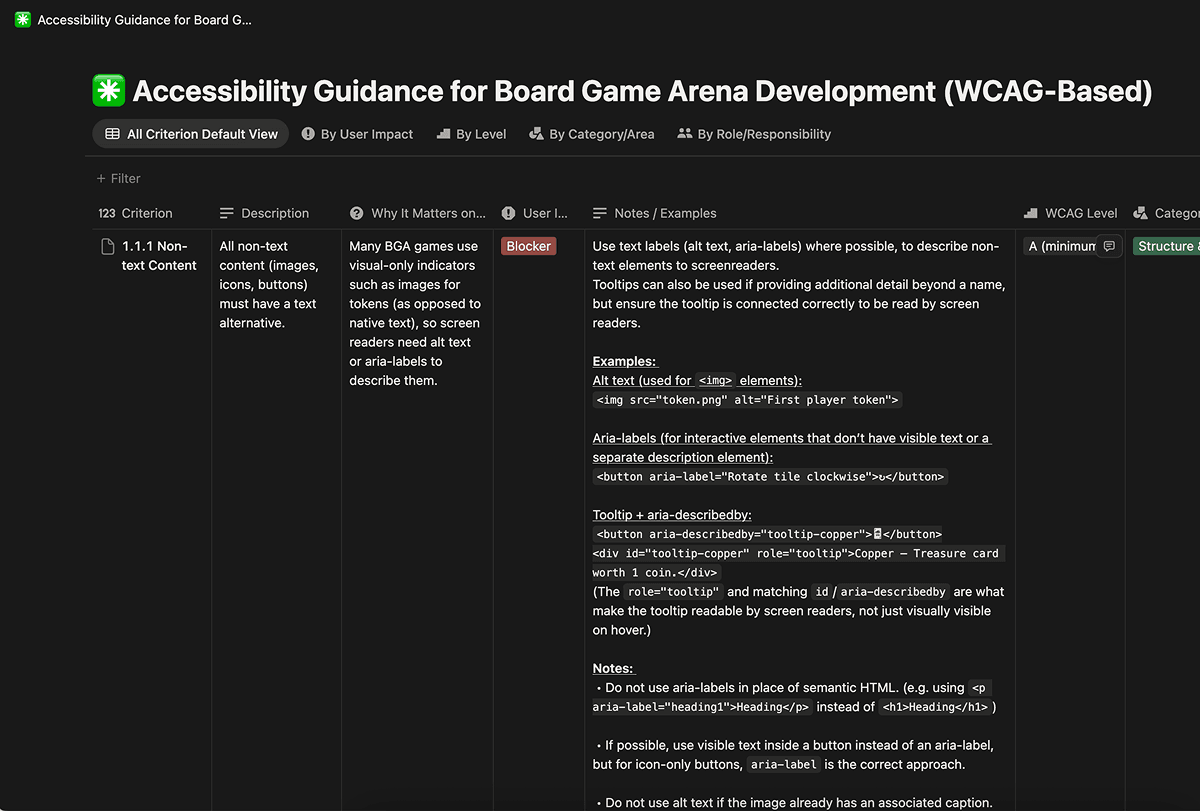
What started as personal learning notes while working on my game, evolved into something larger. As I worked through accessibility challenges specific to the BGA platform, I began documenting practical solutions — not just accessibility theory, but concrete implementation patterns.
The result was an accessibility document focused on:
- BGA-specific guidance: Solutions tailored to BGA's framework, structure, and limitations
- Practical implementation: Real code examples and patterns for common game interface elements
- Game interface solutions: Addressing challenges unique to board game UIs (game boards, card displays, player areas, interactive elements)
Learnings & Next Steps
After sharing this resource with accessibility and web development communities, I received valuable feedback — including the irony that the Notion platform itself has accessibility limitations!
While researching further, I discovered that BGA's existing Studio Documentation wiki already included accessibility-related guidance in several places, even when it wasn't explicitly framed as accessibility guidance.
This led me to rethink the project and how developers were most likely to discover and use this information. Rather than creating a standalone accessibility reference that only those already interested in accessibility would seek out, I'm now exploring how to integrate accessibility recommendations directly into BGA's wiki. My original document will remain a reference for myself and anyone looking for more detailed explanations, implementation examples, or WCAG-specific guidance.
The biggest takeaway from this project has been that improving accessibility isn't only about creating better guidance — it's also about understanding how people find, consume, and apply that guidance in the first place.